
Worship
The Divine Liturgy gathers the Church around Christ through prayer, Scripture, Eucharist, and thanksgiving.
Our Faith
The Orthodox Church is the ancient Christian Church, faithfully preserving the faith, worship, and life received from the apostles.
A living faith
Orthodox Christians believe that God became man in Jesus Christ to restore humanity to communion with God. Through His death and Resurrection, Christ conquers death and opens the way to new life.
The Church lives this good news in worship, prayer, fasting, service, the sacraments, and the loving fellowship of the faithful. The goal is not simply to learn about God, but to be transformed by His grace.
“The glory of God is a human being fully alive.”
The Divine Liturgy gathers the Church around Christ through prayer, Scripture, Eucharist, and thanksgiving.
The Orthodox faith is received from the apostles and carried faithfully through the life of the Church.
Orthodoxy is not only information about God; it is a lifelong journey of healing, repentance, and communion with Him.
The Church is a family in which people of every age learn to love God and one another.
Keep learning
If you are curious about Orthodoxy, attending services, or beginning a journey toward the Church, please contact us. Our parish priest and community are happy to speak with you.
Orthodox resources
The following resources offer a fuller introduction to Orthodox Christianity, its worship, history, teachings, sacraments, and spiritual life.
An ever-growing number of persons from various backgrounds are becoming interested in the Orthodox Church. These individuals are discovering the ancient faith and rich traditions of the Orthodox Church. They have been attracted by her mystical vision of God and His Kingdom, by the beauty of her worship, by the purity of her Christian faith, and by her continuity with the past. These are only some of the treasures of the Church, which has a history reaching back to the time of the Apostles.
In our Western Hemisphere, the Orthodox Church has been developing into a valuable presence and distinctive witness for more than two hundred years. The first Greek Orthodox Christians arrived in the New World in 1768, establishing a colony near the present city of St. Augustine, Florida. One of the original buildings in which these immigrants gathered for religious services is still standing. It has recently been transformed into St. Photius' Shrine by the Greek Orthodox Archdiocese. The Shrine, named in memory of a great missionary of the Orthodox Church, honors those first Orthodox immigrants. The chapel serves as a national religious landmark, bearing witness to the presence of Orthodoxy in America from the earliest days of its history. The next group of Orthodox Christians to emerge on the American Continent were the Russian fur traders in the Aleutian Islands. They, too, made a great contribution.
The Orthodox Church in this country owes its origin to the devotion of so many immigrants from lands such as Greece, Russia, the Middle East, and the Balkans. In the great wave of immigration in the 19th and 20th centuries, Orthodox Christians from many lands and cultures came to America in search of freedom and opportunity. Like the first Apostles, they carried with them a precious heritage and gift. To the New World they brought the ancient faith of the Orthodox Church.
Many Orthodox Christians in America proudly trace their ancestry to the lands and cultures of Europe and Asia, but the Orthodox Church in the United States can no longer be seen as an immigrant Church. While the Orthodox Church contains individuals from numerous ethnic and cultural backgrounds, the majority of her membership is composed of persons who have been born in America. Following the practice of the Early Church, Orthodoxy treasures the various cultures of its people, but it is not bound to any particular culture or people. The Orthodox Church welcomes all!
There are about 5 million Orthodox Christians in this country. They are grouped into nearly a dozen ecclesiastical jurisdictions. The largest is the Greek Orthodox Archdiocese of America, which has about 500 parishes throughout the United States.
The Orthodox Church embodies and expresses the rich spiritual treasures of Eastern Christianity. It should not be forgotten that the Gospel of Christ was first preached and the First Christian communities were established in the lands surrounding the Mediterranean Sea. It was in these eastern regions of the old Roman Empire that the Christian faith matured in its struggle against paganism and heresy. There, the great Fathers lived and taught. It was in the cities of the East that the fundamentals of our faith were proclaimed at the Seven Ecumenical Councils.
The spirit of Christianity which was nurtured in the East had a particular flavor. It was distinct, though not necessarily opposed, to that which developed in the Western portion of the Roman Empire and subsequent Medieval Kingdoms in the West. While Christianity in the West developed in lands which knew the legal and moral philosophy of Ancient Rome, Eastern Christianity developed in lands which knew the Semitic and Hellenistic cultures. While the West was concerned with the Passion of Christ and the sin of man, the East emphasized the Resurrection of Christ and the deification of man. While the West leaned toward a legalistic view of religion, the East espoused a more mystical theology. Since the Early Church was not monolithic, the two great traditions existed together for more than a thousand years until the Great Schism divided the Church. Today, Roman Catholics and Protestants are heirs to the Western tradition, and the Orthodox are heirs to the Eastern tradition.
Christians of the Eastern Churches call themselves Orthodox. This description comes to us from the fifth century and has two meanings which are closely related. The first definition is "true teaching." The Orthodox Church believes that she has maintained and handed down the Christian faith, free from error and distortion, from the days of the Apostles. The second definition, which is actually the more preferred, is "true praise." To bless, praise, and glorify God the Father, Son, and Holy Spirit is the fundamental purpose of the Church. All her activities, even her doctrinal formulations, are directed toward this goal.
Occasionally, the word “Catholic” is also used to describe the Orthodox Church. This description, dating back to the second century, is embodied in the Nicene Creed, which acknowledges One, Holy, Catholic, and Apostolic Church. From the Orthodox perspective, Catholic means that the Church is universal and also that she includes persons of all races and cultures. It also affirms that the Church has preserved the fullness of the Christian faith.
The Orthodox Church is an international federation of patriarchal, autocephalous, and autonomous churches. Each church is independent in her internal organization and follows her own particular customs. However, all the churches are united in the same faith and order. The Orthodox Church acknowledges that unity does not mean uniformity. Some churches are rich in history, such as the Church of Constantinople, while others are relatively young, such as the Church of Finland. Some are large, such as the Church of Russia, while others are small, such as the Church of Sinai. Each Church is led by a synod of bishops.
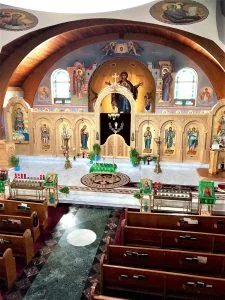
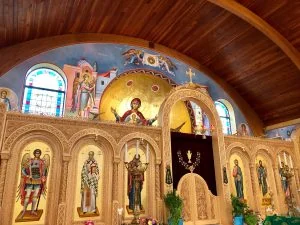
The visitor to an Orthodox Church is usually impressed by the unique features and the external differences between this place of worship and those of the various traditions of Western Christianity. The rich color, distinctive iconography and beauty of the interior of an Orthodox Church generally are in sharp contrast to the simplicity which one finds in many Roman Catholic and Protestant churches. When one enters the interior of the Orthodox church it is like stepping into a whole new world of color and light. The art and design of the church not only create a distinctive atmosphere of worship, but also they reflect and embody many of the fundamental insights of Orthodoxy.
The Orthodox Church believes that God is the Creator of heaven and earth. The Creator is present through His creative energies of His handiwork. This means that the material world, being valuable and good, is an important means through which God expresses Himself. The Orthodox Church affirms this conviction through her extensive use of material creation not only for the embellishment of her places of worship, but also in her sacramental mysteries and services. For example, when the bread and wine - "the first fruits of creation" - are offered in the Eucharist, they are also a symbolic offering of all creation to God its Creator. Since there is no hesitation in using the gifts of creation, the interior of an Orthodox church is frequently very beautiful. Designed to create an atmosphere which is special, the building is filled with a feeling of joy and an appreciation of God's bounty. Orthodoxy recognizes that beauty is an important dimension of human life. Through iconography and church appointments, the beauty of creation becomes a very important means of praising God. The divine gifts of the material world are shaped and fashioned by human hands into an expression of beauty which glorifies the Creator. As the pious woman poured her most precious oil on the feet of Our Lord, Orthodoxy seeks always to offer to God what is best and most beautiful.
The interior church is most importantly, both the background and the setting for Orthodox worship. The art and architecture are designed to contribute to the total experience of worship, which involves one's intellect, feelings, and senses. The Eucharist and the other sacramental mysteries take place in God's midst, and they bear witness to His presence and actions. Therefore, in the Orthodox tradition there is a very strong feeling that the church is the House of God and the place where His glory dwells. For this reason, all Orthodox churches are blessed, consecrated and set aside as sacred space. The whole church bears witness to God's indwelling among His people. As one old admonition says:
"Let the Christian consider well when he enters the church that he is entering another heaven. That same majesty of God which is in heaven is also in his church, and on this account the Christian must enter with reverence and awe."
Ideally, an Orthodox church is relatively small in order to emphasize and enhance the sense of community in worship. The church is generally constructed in the form of a cross and is divided into three areas: the narthex, the nave, and the sanctuary. The narthex is the entrance area. Centuries ago this area was the place where catechumens (unbaptized learners) and penitents remained during parts of the services. Today, the beginning of the Baptismal service and in some parishes, the Marriage service, begins in the narthex and proceeds into the nave. This procession symbolically represents a gradual movement into the Kingdom of God. In many Orthodox parishes, the narthex is the area where the faithful make an offering, receive a candle, light it before an icon, and offer a personal prayer before joining the congregation. The nave is the large center area of the church. Here the faithful gather for worship. Although most Orthodox churches in this country have pews, some follow the old custom of having an open nave with no seats. On the right-hand side of the nave is the bishop's throne from which he presides as a living icon of Christ among his people. Even in the bishop's absence, the throne reminds all that the parish is not an isolated entity but is part of a diocese which the bishop heads. On the left-hand side of the nave is the pulpit from which the Gospel is proclaimed and the sermon preached. The choir and the cantors frequently occupy areas on the far sides of the nave. The sanctuary is considered the most sacred part of the church, and the area reserved for the clergy and their assistant. The sanctuary contains the Holy Altar and is separated from the nave by the Iconostasion. This division serves to remind us that God's reign is not complete and that we often find ourselves 'separated' from God, through sin. However, during the Divine Liturgy, when we have access to the Holy Gifts, we are reminded that, through Christ, heaven and earth are united and that through Him, we have access to the Father. It should be noted that not all services take place within the sanctuary. Many are celebrated in the center of the nave, in the midst of the congregation. In so doing, Orthodoxy emphasizes the fact that the worship of the Church is offered by, and for all the people.
The Altar or Holy Table is the heart and focal point of the Orthodox Church. It is here that eucharistic gifts of bread and wine are offered to the Father as Christ commanded us to do. The altar, which is usually square in shape, stands away from the wall and is often covered with cloths. A tabernacle, with reserved Holy Communion for the sick or dying, is set upon the Altar, together with candles. When the Divine Liturgy is not being celebrated, the Book of Gospels rests on the Altar. Behind the Altar is a large cross with the painted figure of Christ.
The Iconostasion is the panel of icons which separates the sanctuary from the nave. The origin of this very distinctive part of an Orthodox church is the ancient custom of placing icons on a low wall before the sanctuary. In time, the icons became fixed on a standing wall, hence the term iconostasion. In contemporary practice, the Iconostasion may be very elaborate and conceal most of the sanctuary, or it may be very simple and open. The Iconostasion has three entrances which are used during services. There is a Deacon Door on either side, and the center entrance which is called the Royal Door. A curtain or door, usually conceals the Altar when services are not being celebrated. On the right-hand side of the Iconostasion are always the icons of Christ and St. John the Baptist. On the left-hand side are always the icons of the Theotokos (Mother of our Lord) and the patron saint or event to which the church is dedicated. In addition to these icons, others may be added, depending upon custom and space.
An icon is a holy image which is the distinctive art form of the Orthodox Church. In actual practice the icon may be a painting of wood, on canvas, a mosaic or a fresco. Icons depict such figures as Christ, Mary the Theotokos, the saints and angels. They may also portray events from the Scriptures or the history of the Church, such as Christmas, Easter, etc. Icons occupy a very prominent place in Orthodox worship and theology. The icon is not simply decorative, inspirational, or educational. Most importantly, it signifies the presence of the individual depicted. The icon is like a window which links heaven and earth. When we worship we do so as part of the Church which includes the living and the departed. we never lost contact with those who are with the Lord in glory. This belief is expressed every time one venerates an icon or places a candle before it. Many Orthodox churches have icons not only on the iconostasion but also on the walls, ceilings, and in arches. Above the sanctuary in the apse, there is very frequently a large icon of the Theotokos and the Christ Child. The Orthodox Church believes that Mary is the human being closest to God. This very prominent icon recalls her important role in the Incarnation of the Son of God. The icon is also an image of the Church. It reminds us of our responsibility to give birth to Christ's presence in our lives. High above the church, in the ceiling or dome, is the icon of Christ the Almighty, the Pantocrator. The icon portrays the Triumphant Christ who reigns as Lord of heaven and earth. As one gazes downward, it appears as though the whole church and all of creation comes from Him. As one looks upward, there is the feeling that all things direct us to Christ the Lord. He is the "Alpha and the Omega," the beginning and the end. This is the message of Orthodoxy.
O Come, let us Worship and bow down before our King and God. O Come, let us worship and bow down before Christ, our King and God. O Come, let us worship and bow down to Christ Himself, our King and God. This invitation marks the beginning of each day for the Orthodox Church. It comes from the office of Vespers, and it expresses the attitude which is at the heart of Orthodoxy. The Worship of God - the Father, Son, and Holy Spirit, - is fundamental to the life and spirit of the Orthodox Church.
Since Worship is so important to Orthodoxy, the best introduction to the Orthodox Church is for the non-Orthodox to attend the Divine Liturgy or the celebration of various liturgical services. At first, the visitor may be overwhelmed by the music and the ceremonies, but it is in Worship that the distinctive flavor, rich traditions, and living faith of Orthodoxy are truly experienced.
Worship is an experience which involves the entire Church. When each of us comes together for Worship, we do so as members of a Church which transcends the boundaries of society, of time and of space. Although we gather at a particular moment and at a particular place, our actions reach beyond the parish, into the very Kingdom of God. We worship in the company of both the living and the departed faithful.
There are two dimensions to Orthodox Worship which are reflected throughout the many Services of the Church. First, Worship is a manifestation of God's presence and action in the midst of His people. It is God who gathers His scattered people together, and it is He who reveals Himself as we enter into His presence. The Worship of the Orthodox Church very vividly expresses the truth that God dwells among His people and that we are created to share in His life.
Second, Worship is our corporate response of thanksgiving to the presence of God and a remembrance of His saving actions - especially the Life, Death, and Resurrection of Jesus Christ. Orthodox Worship is centered upon God. He has acted in history, and He continues to act through the Holy Spirit. We are mindful of His actions and we respond to His love with praise and thanksgiving. In doing so we come closer to God.
Worship in the Orthodox Church is expressed in four principal ways:
The Eucharist, which is the most important worship experience of Orthodoxy. Eucharist means thanksgiving and is known in the Orthodox Church as the Divine Liturgy.
The Sacraments, which affirm God's presence and action in the important events of our Christian lives. All the major Sacraments are closely related to the Eucharist. These are: Baptism, Chrismation, Confession, Marriage, Holy Orders, and Anointing of the sick.
Special Services and Blessings, which also affirm God's presence and action in all the events, needs and tasks of our life.
The Daily Offices, which are the services of public prayer which occur throughout the day. The most important are Matins, which is the morning prayer of the Church, and Vespers, which is the evening prayer of the Church.
Although Orthodox Services can very often be elaborate, solemn, and lengthy, they express a deep and pervasive sense of joy. This mood is an expression of our belief in the Resurrection of Christ and the deification of humanity, which are dominant themes of Orthodox Worship. In order to enhance this feeling and to encourage full participation, Services are always sung or chanted.
Worship is not simply expressed in words. In addition to prayers, hymns, and scripture readings, there are a number of ceremonies, gestures, and processions. The Church makes rich use of non verbal symbols to express God's presence and our relationship to Him. Orthodoxy Worship involves the whole person; one's intellect, feelings, and senses.
Services in the Orthodox Church follow a prescribed order. There is a framework and design to our Worship. This is valuable in order to preserve its corporate dimension and maintain a continuity with the past. The content of the Services is also set. There are unchanging elements; and there are parts which change according to the Feast, season, or particular circumstance. The regulating of the Services by the whole Church emphasizes the fact that Worship is an expression of the entire Church, and not the composition of a particular priest or congregation.
An important secondary purpose of Worship is the teaching of the Faith. There is a very close relationship between the Worship and the teachings of the Church. Faith is expressed in Worship, and Worship serves to strengthen and communicate Faith. As a consequence, the prayers, hymns, and liturgical gestures of Orthodoxy are important mediums of teaching. The regulating of the Services also serves to preserve the true Faith and to guard it against error.
The celebration of the Divine Liturgy and the Sacraments is always led by an ordained clergymen. In the local parish, this will generally be a priest who acts in the name of the bishop, and who is sometimes assisted by a deacon. When the bishop is present, he presides at the Services. The vestments of the clergy express their special calling to the ministry as well as their particular office.
Since Worship in Orthodoxy is an expression of the entire Church the active participation and involvement of the congregation is required. There are no "private" or "said" services in the Orthodox Church and none may take place without a congregation. This strong sense of community is expressed in the prayers and exhortations which are in the plural tense. The congregation is expected to participate actively in the services in ways such as: singing the hymns; concluding the prayers with "Amen"; responding to the petitions; making the sign of the Cross; bowing; and, especially, by receiving Holy Communion at the Divine Liturgy.
Orthodox Worship has always been celebrated in the language of the people. There is no official or universal liturgical language. Often, two or more languages are used in the Services to accommodate the needs of the congregation. Throughout the world, services are celebrated in more than twenty languages which include such diverse ones as English, Greek, Slavonic, Arabic, Albanian, and Romanian.
Sacraments
One of the best-known prayers of the Orthodox Church speaks of the spirit of God being "present in all places and filling all things." This profound affirmation is basic to Orthodoxy's understanding of God and His relationship to the world. We believe that God is truly near to us. Although He cannot be seen, God is not detached from His creation. Through the persons of The Risen Christ and the Holy Spirit, God is present and active in our lives and in the creation about us. All our life and the creation of which we are an important part, points to and reveals God.
There are special experiences in our corporate life as Orthodox Christians when the perception of God's presence and actions is heightened and celebrated. We call these events of the Church Sacraments. Traditionally, the Sacraments have been known as Mysteries in the Orthodox Church. This description emphasizes that in these special events of the Church, God discloses Himself through the prayers and actions of His people.
Not only do the Sacraments disclose and reveal God to us, but also they serve to make us receptive to God. All the Sacraments affect our personal relationship to God and to one another. The Holy Spirit works through the Sacraments. He leads us to Christ who unites us with the Father. By participating in the Sacraments, we grow closer to God and to receive the gifts of the Holy Spirit. This process of deification, or theosis, as it is known by Orthodoxy, takes place not in isolation from others, but within the context of a believing community. Although the Sacraments are addressed to each of us by name, they are experiences which involve the entire Church.
The Sacraments of the Orthodox Church are composed of prayers, hymns, scripture lessons, gestures and processions. Many parts of the services date back to the time of the Apostles. The Orthodox Church has avoided reducing the Sacraments to a particular formula or action. Often, a whole series of sacred acts make up a Sacrament. Most of the Sacraments use a portion of the material of creation as an outward and visible sign of God's revelation. Water, oil, bread and wine are but a few of the many elements which the Orthodox Church employs in her Worship. The frequent use of the material of creation reminds us that matter is good and can become a medium of the Spirit. Most importantly, it affirms the central truth of the Orthodox Christian faith: that God became flesh in Jesus Christ and entered into the midst of creation thereby redirecting the cosmos toward its vocation to glorify its Creator.
The Holy Eucharist, which is known as the Divine Liturgy, is the central and most important worship experience of the Orthodox Church. Often referred to as the "Sacrament of Sacraments", it is the Church's celebration of the Death and Resurrection of Christ offered every Sunday and Holy day. All the other Sacraments of the Church lead toward and flow from the Eucharist, which is at the center of the life of the Church. The previous pamphlet in this series was devoted to the meaning and celebration of the Eucharist in the Orthodox Church.
The Sacrament of Baptism incorporates us into the Church, the Body of Christ, and is our introduction to the life of the Holy Trinity. Water is a natural symbol of cleansing and newness of life. Through the three-fold immersion in the waters of Baptism in the Name of the Holy Trinity, one dies to the old ways of sin and is born to a new life in Christ. Baptism is one's public identification with Christ Death and victorious Resurrection. Following the custom of the early Church, Orthodoxy encourages the baptism of infants. The Church believes that the Sacrament is bearing witness to the action of God who chooses a child to be an important member of His people. From the day of their baptism, children are expected to mature in the life of the Spirit, through their family and the Church. The Baptism of adults is practiced when there was no previous baptism in the name of the Holy Trinity.
The Sacrament of Chrismation (Confirmation) immediately follows baptism and is never delayed until a later age. As the ministry of Christ was enlivened by the Spirit, and the preaching of the Apostles strengthened by the Spirit, so is the life of each Orthodox Christian sanctified by the Holy Spirit. Chrismation, which is often referred to as one's personal Pentecost, is the Sacrament which imparts the Spirit in a special way.
In the Sacrament of Chrismation, the priest anoints the various parts of the body of the newly-baptized with Holy Oil saying: "The seal of the gifts of the Holy Spirit." The Holy Oil, which is blessed by the bishop, is a sign of consecration and strength. The Sacrament emphasizes the truth that not only is each person a valuable member of the Church, but also each one is blessed by the Spirit with certain gifts and talents. The anointing also reminds us that our bodies are valuable and are involved in the process of salvation.
The Sacraments of initiation always conclude with the distribution of Holy Communion to the newly-baptized. Ideally, this takes place within the celebration of the Divine Liturgy. This practice reveals that Orthodoxy views children from their infancy as important members of the Church. There is never a time when the young are not part of God's people.
As members of the Church, we have responsibilities to one another and, of course, to God. When we sin, our relationship to God and to others is distorted. Sin is ultimately alienation from God, from our fellow human beings, and from our own true self which is created in God's image and likeness.
Confession is the Sacrament through which our sins are forgiven, and our relationship to God and to others is restored and strengthened. Through the Sacrament, Christ our Lord continues to heal those broken in spirit and restore the Father's love to those who are lost. According to Orthodox teaching, the penitent confesses to God and is forgiven by God. The priest is the sacramental witness who represents both Christ and His people. The priest is viewed not as a judge, but as a physician and guide. It is an ancient Orthodox practice for every Christian to have a confessor or spiritual father to whom one turns for spiritual advice and counsel. Confession can take place on any number of occasions. The frequency is left to the discretion of the individual with his/her priest. In the event of serious sin, however, confession is a necessary preparation for Holy Communion.
God is active in our lives. It is He who joins a man and a woman in a relationship of mutual love. The Sacrament of Marriage bears witness to His action. Through this Sacrament, a man and a woman are publicly joined as husband and wife. They enter into a new relationship with each other, God, and the Church. Since marriage is not viewed as a legal contract, there are no vows in the Sacrament. According to Orthodox teachings, marriage is not simply a social institution, it is an eternal vocation of the kingdom. A husband and a wife are called by the holy Spirit not only to live together but also to share their Christian life together so that each, with the aid of the other, may grow closer to God and become the persons they are meant to be. In the Orthodox Marriage Service, after the couple have been betrothed and exchanged rings, they are crowned with "crowns of glory and honor" signifying the establishment of a new family under God. Near the conclusion of the Service, the husband and wife drink from a common cup which is reminiscent of the wedding of Cana and which symbolized the sharing of the burdens and joys of their new life together.
The Holy Spirit preserved the continuity of the Church through the Sacrament of Holy Orders. Through ordination, men who have been chosen from within the Church are set apart by the Church for special service to the Church. Each is called by God through His people to stand amid the community, as pastor and teacher, and as the representative of the parish before the Altar. Each is also a living icon of Christ among His people. According to Orthodox teaching, the process of ordination begins with the local congregation; but the bishop alone, who acts in the name of the universal Church, can complete the action. He does so with the invocation of the Holy Spirit and the imposition of his hands on the person being ordained.
Following the custom of the Apostolic Church, there are three major orders each of which requires a special ordination. These are Bishop, who is viewed as a successor of the Apostles, Priest (Presbyter) and Deacon, who act in the name of the Bishop. Each order is distinguished by its pastoral responsibilities. Only a Bishop may ordain. Often, other titles and offices are associated with the three orders. The Orthodox Church permits men to marry before they are ordained. Since the sixth century, Bishops have been chosen from the celibate clergy.
When one is ill and in pain, this can very often be a time of life when one feels alone and isolated. The Sacrament of the Anointing of the Sick, or Holy Unction as it is also known, remind us that when we are in pain, either physical, emotional, or spiritual, Christ is present with us through the ministry of his Church. He is among us to offer strength to meet the challenges of life, and even the approach of death.
As with Chrismation, oil is also used in this Sacrament as a sign of God's presence, strength, and forgiveness. After the reading of seven epistle lessons, seven gospel lessons and the offering of seven prayers, which are all devoted to healing, the priest anoints the body with the Holy Oil. Orthodoxy does not view this Sacrament as available only to those who are near death. It is offered to all who are sick in body, mind, or spirit. The Church celebrates the Sacrament for all its members during Holy week on Holy Wednesday.
In addition to the Eucharist she accepts the above six Mysteries as major Sacraments because they involve the entire community and most important are closely related to the Eucharist. There are many other Blessings and Special Services which complete the major Sacraments, and which reflect the Church's presence throughout the lives of her people. Some of these are discussed on other tabs on this site.
Teachings
The Orthodox Church throughout the ages has maintained a continuity of faith and love with the apostolic community which was founded by Christ and sustained by the Holy Spirit. Orthodoxy believes that she has preserved and taught the historic Christian Faith, free from error and distortion, from the time of the Apostles. She also believes that there is nothing in the body of her teachings which is contrary to truth or which inhibits real union with God. The air of antiquity and timelessness which often characterizes Eastern Christianity is an expression of her desire to remain loyal to the authentic Christian Faith.
Orthodoxy believes that the Christian Faith and the Church are inseparable. It is in the Church that the Christian Faith is proclaimed and maintained. It is through the Church that an individual is nurtured in the Faith.
God is the source of faith in the Orthodox Church. Orthodoxy believes that God has revealed Himself to us, most especially in the revelation of Jesus Christ, whom we know as the Son of God. This Revelation of God, His love, and His purpose, is constantly made manifest and contemporary in the life of the Church by the power of the Holy Spirit.
The Orthodox Faith does not begin with mankind's religious speculations, nor with the so-called "proofs" for the existence of God, nor with a human quest for the Divine. The origin of the Orthodox Christian Faith is the Self-revelation of God. Each day, the Church's Morning Prayer affirms and reminds us of this by declaring, "God is the Lord and He has revealed Himself to us." While the inner Being of God always remains unknown and unapproachable, God has manifested Himself to us; and the Church has experienced Him as Father, Son, and Holy Spirit. The Doctrine of the Holy Trinity, which is central to the Orthodox Faith, is not a result of pious speculation, but of the overwhelming experience of God. The doctrine affirms that there is only One God, in whom there are three distinct Persons. In other words, when we encounter the Father, the Son, or the Holy Spirit, we are truly experiencing contact with God. While the Holy Trinity is a mystery which can never be fully comprehended, Orthodoxy believes that we can truly participate in the Trinity through the life of the Church, especially through our celebration of the Eucharist and the Sacraments, as well as the non-sacramental services.
Together with the belief in the Holy Trinity, the doctrine of the Incarnation occupies a central position in the teaching of the Orthodox Church. According to Orthodox Faith, Jesus is much more than a pious man or a profound teacher of morality. He is the "Son of God who became the Son of Man." The doctrine of the Incarnation is an expression of the Church's experience of Christ. In Him, divinity is united with humanity without the destruction of either reality. Jesus Christ is truly God who shares in the same reality as the Father and the Spirit. Moreover, He is truly man who shares with us all that is human. The Church believes that, as the unique God-man, Jesus Christ has restored humanity to fellowship with God.
By manifesting the Holy Trinity, by teaching the meaning of authentic human life, and by conquering the powers of sin and death through His Resurrection, Christ is the supreme expression of the love of God the Father, for His people, made present in every age and in every place by the Holy Spirit through the life of the Church. The great Fathers of the Church summarized the ministry of Christ in the bold affirmation, "God became what we are so that we may become what He is."
The Holy Scriptures are highly regarded by the Orthodox Church. Their importance is expressed in the fact that a portion of the Bible is read at every service of Worship. The Orthodox Church, which sees itself as the guardian and interpreter of the Scriptures, believes that the books of the Bible are a valuable witness to God's revelation. The Old Testament is a collection of forty-nine books of various literary styles which expresses God's revelation to the ancient Israelites. The Orthodox Church regards the Old Testament as a preparation for the coming of Christ and believes that it should be read in light of His revelation.
The New Testament is centered upon the person and work of Jesus Christ and the out-pouring of the Holy Spirit in the early Church. The four Gospels are an account of Christ's life and teaching, centering upon His Death and Resurrection. The twenty-one epistles and the Acts of the Apostles are devoted to the Christian life and the development of the early Church. The Book of Revelation is a very symbolic text which looks to the return of Christ. The New Testament, especially the Gospels, is very important to Orthodoxy because here is found a written witness to the perfect revelation of God in the Incarnation of the Son of God, in the person of Jesus Christ.
While the Bible is treasured as a valuable written record of God's revelation, it does not contain the entirety of that revelation. The Bible is viewed as one immensely important expression of God's revelation in the on-going life of His people. Scripture is part of the treasure of Faith, known as Holy Tradition. Tradition means that which is "handed on" from one generation to another. In addition to the witness of Faith in the Scripture, the Orthodox Christian Faith is celebrated in the Eucharist; taught by the Fathers; glorified by the Saints; expressed in prayers, hymns, and icons; defended by the seven Ecumenical Councils; embodied in the Nicene Creed; manifested in social concern; and, by the power of the Holy Spirit, it is lived in every local Orthodox parish. The life of the Holy Trinity is manifested in every aspect of the Church's life. Finally, the Church, as a whole, is the guardian of the authentic Christian Faith which bears witness to that Revelation.
As Orthodoxy has avoided the tendency to restrict the vision of God's revelation to one avenue of its life, the Church has also avoided the systematic or extensive definition of its Faith. Orthodoxy affirms that the Christian Faith expresses and points to the gracious and mysterious relationship between God and humanity. God became man in the person of Jesus Christ not to institute a new philosophy or code of conduct, but primarily to bestow upon us "new life" in the Holy Trinity. This reality, which is manifest in the Church, cannot be wholly captured in language, formulas, or definitions. The content of the Faith is not opposed to reason, but is often beyond the bounds of reason, as are many of the important realities of life. Orthodoxy recognizes the supreme majesty of God, as well as the limitations of the human mind. The Church is content to accept the element of mystery in its approach to God.
Only when the fundamental truths of the Faith are seriously threatened by false teachings does the Church act to define dogmatically an article of faith. For this reason, the decisions of the seven Ecumenical Councils of the ancient undivided Church are highly respected. The Councils were synods to which bishops from throughout the Christian world gathered to determine the true faith. The Ecumenical Councils did not create new doctrines but proclaimed, in a particular place and a particular time, what the Church has always believed and taught.
The Nicene Creed, which was formulated at the Councils of Nicaea in 325 and of Constantinople in 381, has been recognized since then as the authoritative expression of the fundamental beliefs of the Orthodox Church. The Creed is often referred to as the "Symbol of Faith." This description indicates that the Creed is not an analytical statement, but that it points to a reality greater than itself and to which it bears witness. For generations, the Creed has been the criterion of authentic Faith and the basis of Christian education. The Creed is recited at the time of Baptism and during every Divine Liturgy.
"I believe in One God, Father Almighty, Maker of heaven and earth and of all things visible and invisible.
And in One Lord, Jesus Christ, the only-begotten Son of God, begotten of the Father before all ages.
Light of Light, true God of true God, begotten, not created, of one essence with the Father, through whom all things were made.
For us and for our salvation He came down from heaven and was incarnate by the Holy Spirit and the Virgin Mary and became Man.
He was crucified for us under Pontius Pilate, and He suffered and was buried.
On the third day He rose according to the Scriptures.
He ascended into heaven and is seated at the right hand of the Father.
He will come again with glory to judge the living and the dead. His kingdom will have no end.
And in the Holy Spirit, the Lord, Giver of Life, who proceeds from the Father, who together with the Father and the Son is worshipped and glorified, who spoke through the prophets.
In one, holy, catholic, and apostolic Church.
I acknowledge one baptism for the forgiveness of sins.
I expect the resurrection of the dead; and the life of the age to come.
Amen.
Spirituality
The Orthodox Church proclaims the Gospel of Jesus Christ. In the Greek language, the word for Gospel is “Evangelion” which means literally "the good news." The good news of Orthodox Christianity is a proclamation of God's unbounded and sacrificial love for man kind, as well as the revelation of the true destiny of the human person. Reflecting on the joyous message of the Gospel, Saint Gregory of Nyssa wrote in the fourth century: The good news is that man is no longer an outcast nor expelled from God's Kingdom; but that he is again a son, again God's subject.
Orthodoxy believes that the supreme treasure which God wishes to share with us is His own life. Our faith begins with the affirmation that God has acted in history to permit us to participate in His love and His goodness, to be citizens of His Kingdom. This conviction is expressed so beautifully in the prayer of the Liturgy which says: "You have not ceased to do all things until You brought us to heaven and granted us the Kingdom to come."
The initiation of love of God the Father is perfectly expressed and embodied in the Person and Ministry of Jesus Christ. The whole purpose of the Incarnation of the Son of God was to restore humanity to fellowship with God. The great teachers and Fathers of the Orthodox Church constantly reaffirmed this conviction by proclaiming that God had become what we are in order that we could become what He is.
Christ is exalted as our Light and our Life. In His Person there is a unity of humanity and divinity which each of us is called to share. In His way of life. there is the model of authentic human life which we are invited to follow. In His victorious Resurrection, there is liberation for us from all powers which can keep us from the Kingdom. Through Christ, then, God the Father has repossessed us and has called us to be His sons and daughters.
The fundamental vocation and goal of each and every person is to share in the life of God. We have been created by God to live in fellowship with Him. The descent of God in the Person of Jesus Christ has made possible the human ascent to the Father through the work of the Holy Spirit. Orthodoxy believes that each Christian is involved in a movement toward God which is known as theosis or deification.
Theosis describes the spiritual pilgrimage in which each person becomes ever more perfect, ever more holy, ever more united with God. It is not a static relationship, nor does it take place only after death. On the contrary, theosis is a movement of love toward God which begins for each Christian with the rites of Baptism and which continues throughout this life, as well as the life which is to come. Salvation means liberation from sin, death, and evil. Redemption means our repossession by God. In Orthodoxy, both salvation and redemption are within the context of this deification. This rich vision of Christian life was expressed well by Saint Peter when he wrote in the early pages of his second Epistle that we are called "to become partakers of the Divine nature."
These are certainly bold affirmations which must be properly understood. The Orthodox Church understands theosis as a union with the energies of God and not with the essence of God which always remains hidden and unknown. However, the experience of the Church testifies that this is a true union with God. It is also one which is not pantheistic, because in this union the divine and the human retain their unique characteristics. In this sense, Orthodoxy believes that human life reaches its fulfillment only when it becomes divine.
The ever-deepening union of each Christian with God is not a magical or automatic process. While Christ has destroyed the powers of sin, death, and evil once and for all, this victory must be appropriated by each person in cooperation with the Holy Spirit. Each person is called to join with the lifegiving and liberating Spirit" in realizing the fulness of human life in communion with the Father. The Holy Spirit is the agent of deification whose task it is to incorporate us into the life of the Holy Trinity. However, the Spirit always recognizes our human freedom and invites our active cooperation in perfecting the "image and likeness of God" with which each of us is created.
Our participation in the life of the Holy Trinity, which we know as theosis, takes place within the Church. For the Orthodox, the Church is the meeting place between God and His people. The Holy Spirit and the Church are organically linked. In the second century, Saint Irenaeus reminded us of this by saying: "Where the Church is there is the Spirit, and where the Spirit is there is the Church." The Holy Spirit moves through the life of the Church to reveal our common humanity in Christ and to unite us with the Father. We acquire the Holy Spirit through our celebration of the Eucharist and the reception of Holy Communion, through our participation in the Sacraments, through our discipline of daily prayer, and through the practice of fasting, all of which result in a Christ-like life.
The Holy Spirit, Who is honored as the Lord and Giver of life, is manifest in the life of the Church in order to bring our lives to perfection, and to make us responsible and loving human beings. The fruit of Worship is the gifts of the Spirit. In his letter to the Galatians, Saint Paul identified these as: "love, joy, peace, patience, kindness, goodness, fidelity, gentleness, and self-control." Certainly, these are the virtues of a Christ-like life. They testify to the fact that the love of God and the love of neighbor are inseparable.
The reality of theosis not only bears witness to the love of God who wishes to share Himself with us but also expresses a very positive view of the human person. Orthodoxy believes that each person has an intrinsic value and importance in virtue of his or her unique relationship to God. The human person is never seen as being totally depraved. The "image of God" which can be distorted by sin, can never be eradicated. Through the life of the Church, there is always the opportunity for fulfillment. When the Sacraments are administered, they are always offered to the individual by name. This action not only reminds us of the dignity of each person but also emphasizes the responsibility each person has for his or her relationship to God.
While Orthodoxy recognizes the value of the person, it does not believe that we are meant to be isolated or self-sufficient. Each person is called to be an important member of the Church. Orthodoxy believes that one cannot be a Christian without being a part of the Church. The process of theosis takes place with the context of a believing community.
To be united with God within the midst of the Church does not mean that our unique personalities are destroyed. We are not engulfed by an impersonal force or power. As with all love which is true and valuable, God's love for each of us respects our personhood. His love is not one which destroys. God's love is one which reveals, elevates, and perfects our true selves. By entering into the life of God, we become the persons we are meant to be.
History
The Church has her origin with Jesus Christ and the Holy Spirit, not with a human teacher, or group, nor a code of conduct or religious philosophy. Orthodoxy believes that the Church has her origin in the Apostolic Community called into being by Jesus Christ, and enlivened by the Holy Spirit. The Feast of Pentecost, which is celebrated fifty days after Easter, commemorates the "outpouring'' of the Holy Spirit upon the Apostles and marks the beginning of the mission of the Church to the world. The Orthodox Church believes that she has maintained a direct and unbroken continuity of love, faith, and order with the Church of Christ born in the Pentecost experience.
The earliest Church, which is described in the Epistles and the Acts of the Apostles, did not confine itself to the land of Judea. She took very seriously the command of Our Lord to go into the whole world and preach the Gospel. The words of Christ and the event of His saving Death and Resurrection were destined not only for the people of the first century and the Mediterranean world of which they were a part, but also for persons in all places and in every age. Within only a few years after the Resurrection, colonies of Christians sprung in the major cities of the Roman Empire.
While the early Church received many converts from Judaism and the pagan religions, the world in which the Gospel was proclaimed was, in the words of St. Paul, "heartless and ruthless." With only a few intervals of peace, the Church was persecuted throughout the Empire for nearly three hundred years. The faith and love expressed by the Christians were viewed as a threat to the religion and political policies of the Empire. Thousands of Christians were martyred.
The beginning of the fourth century marked a new stage in the development of the Church. After centuries of vicious persecution at the direction of the Roman Emperors, an Emperor of Rome became a Christian. This was Constantine the Great, who in the year 313 granted Christians freedom of worship. The Edict was a recognition that the Church not only had survived the persecutions but also had become a significant force in the Empire. From that time onward, the Church and the Empire began a very close and mutually beneficial relationship. Not only did the Church receive imperial support, but also the evils which had characterized the old Roman Empire were greatly reduced in Christian Byzantium. The Church was truly a leaven of the society of which it was a part. The fourth through the tenth centuries were a significant period for the Church's internal development. The authoritative content of the New Testament was determined. The Services of Worship received a formal framework. The Teachings of Christianity were developed by great pastors and theologians who are known as the "Fathers" of the Church. It was also a period of missionary activity. Among the most important was the evangelization of the Slavs by Saints Cyril and Methodius. However, the period was not without struggle. The Byzantine Empire was constantly on guard against the neighboring Persians and Muslims. The Church itself was frequently afflicted with many grave schisms and heresies. For example, serious schisms took place in the years 431 and 451. Among the greatest heresies was Arianism, which taught that Christ was not truly God. This heresy plagued the Church and brought havoc to the Empire for nearly a century.
The fundamental doctrines of the Church were proclaimed and defended by the Seven Ecumenical Councils. These Synods, which are known by the names of the cities in which they were convened, included Bishops from throughout the world, who came to affirm the authentic teachings on the Incarnation and the Holy Trinity. The Councils did not create new doctrines, but in a particular place and time, they proclaimed what the Church always believed and taught. The conciliar and collegial expression of Church life and authority which was manifest at the Ecumenical Councils and other synods of the early Church continue to be an important aspect of Orthodox Christianity.
The Ecumenical Councils also sanctioned the organization of the Church about the five great ecclesiastical centers of Rome, Constantinople, Alexandria, Antioch, and Jerusalem. The Archbishops of these cities came to be known as Patriarchs. They presided over the synod of bishops in a particular area. Since the early Church was not monolithic, each center had its own theological style, customs, and liturgical traditions. Yet, all shared in the unity of the faith. However, a primacy of honor was accorded the Bishop of Rome, from early times. The Second Ecumenical Council (381) gave Constantinople a position of honor by stating, "The Bishop of Constantinople shall have the prerogative of honor after the Bishops of Rome, because Constantinople is New Rome."
The Great Schism is the title given to separation between the Western Church (the Roman Catholic) and the Eastern Church, (the Orthodox), which took place in the eleventh century. Relations between the two great traditions of the East and the West had often been strained since the fourth century. Yet, unity and harmony was maintained in spite of differences in theological expression, liturgical practices, and views of authority. By the ninth century, however, legitimate differences were intensified by political circumstances, cultural clashes, papal claims, and the introduction in the West of the Filioque phrase into the Nicene Creed. The Filioque affirms that the Holy Spirit proceeds from the Father and the Son. Both the papal claims and the Filioque were strongly repudiated by the East.
Although it is difficult to date the exact year of the schism, in the year 1054 official charges, known as Anathamas, were exchanged. The Crusades, and especially the sack of the city of Constantinople by the western crusaders in 1204, can be considered the final element in the process of estrangement and deepening mistrust.
From that period onward, the Western Church, centered about the Pope of Rome, and the Eastern Church, centered about the Patriarch of Constantinople, tragically went their separate ways. Although there were attempts to restore communion in the years 1274 and 1439, there was no lasting unity achieved. While political, cultural, and emotional factors have always been involved, the Orthodox Church believes that the two principal reasons for the continued schism are the papal claims of universal jurisdiction and infallibility, as well as the meaning of the Filioque.
For nearly 500 years the two traditions lived in formal isolation from each other. Only, since the early 1960's have steps been taken to restore the broken unity. Most significant has been the mutual lifting of the Anathamas of 1054 by the late Patriarch Athenagoras and Pope Paul VI in 1965.
In the year 1453, the City of Constantinople fell to the invading Muslims. With its capital, the Byzantine Empire came to an end; and the vast lands of Asia Minor fell subject to non-Christians. The great ecclesiastical cities of Alexandria, Antioch, and Jerusalem, which had come under the political control of Islam centuries earlier, were now joined by Constantinople. Throughout the Ottoman Empire, Christians came to be treated as second-class citizens who paid heavy taxes and wore distinctive dress. The life of the Orthodox Church in the Balkan and Asia Minor continued, but under much duress. Thousands of Christians suffered martyrdom. Patriarchs were deposed and murdered. Churches, monasteries, and schools were closed and destroyed. Only with the liberation of Greece in 1821, did some of the brutality come to an end. However, there were a series of vicious massacres at the beginning of this century. And, even today, Christians are denied their basic human rights in parts of Asia Minor.
After the decline of Byzantium, the Church in Russia thrived for nearly 500 years. However, with the Bolshevik revolution of 1917, Orthodoxy found itself confronted with the beliefs and political policies of militant atheists. Most churches were closed; and a policy was inaugurated to eliminate Christianity from Russia, a land which was steeped in Orthodoxy since the tenth century. In the years between the two World Wars, Orthodox Christians in Russia suffered much cruel and devastating persecution. Only since 1943 have there been modifications in government policy which have permitted the Church some degree of existence.
Today, in many of the lands which were once the pride and glory of Eastern Christendom, the Orthodox Church struggles amid great obstacles and persecution. It has been observed that in recent centuries there have been more martyrs than during the great persecutions of the early Church. Yet, despite injustices and indignities, the Faith survives.
Throughout the past two hundred years the Orthodox Church in the Western Hemisphere has been developing as a valuable presence and distinctive witness. For example, in the United States, Orthodoxy has been recognized as one of the four major faiths. She has more than five million members, who are grouped into more than a dozen ecclesiastical jurisdictions. The Greek Orthodox Archdiocese, which is the largest, has about 500 parishes and operates church schools, parochial schools, an orphanage, a college, and a graduate theological school. Many believe that Orthodoxy in America has the potential for true renewal, creative development, and missionary activity which can contribute greatly to American life.
Source: Greek Orthodox Archdiocese of America, http://www.goarch.org
Stay connected
Sign up for news from St. Athanasios Greek Orthodox Church. Complete the email consent option in the form; Constant Contact will show the signup result.
Read our Privacy Policy.